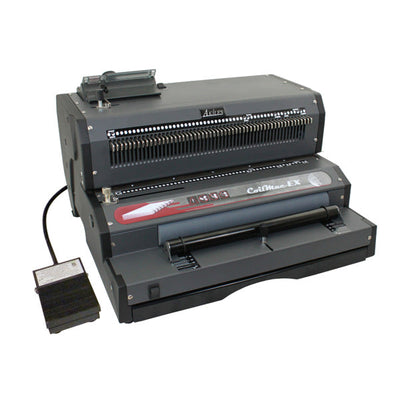
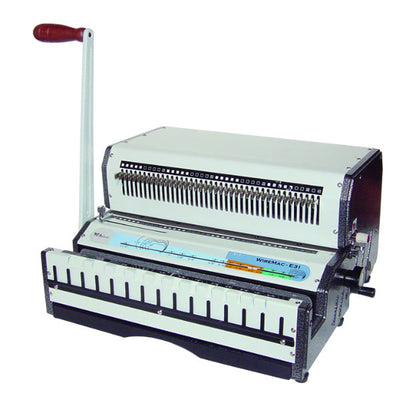
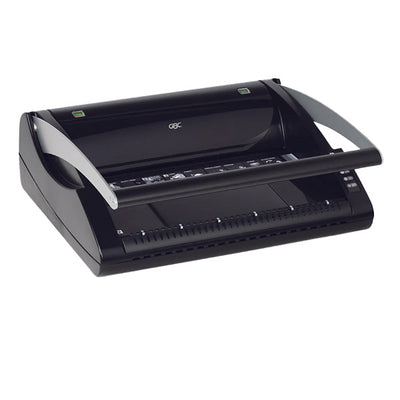
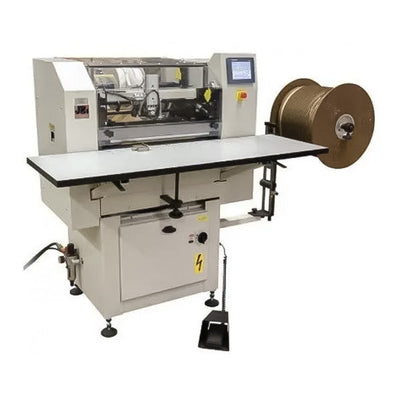
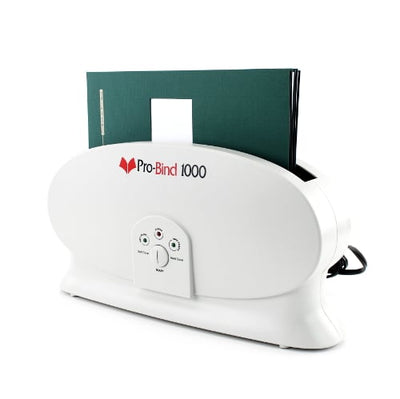
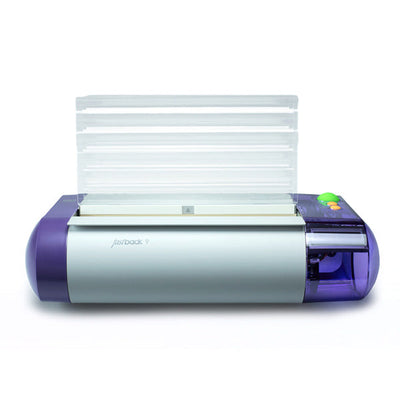
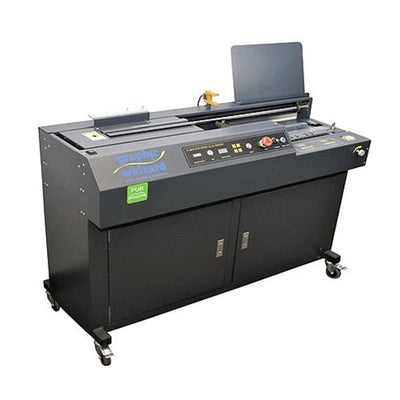
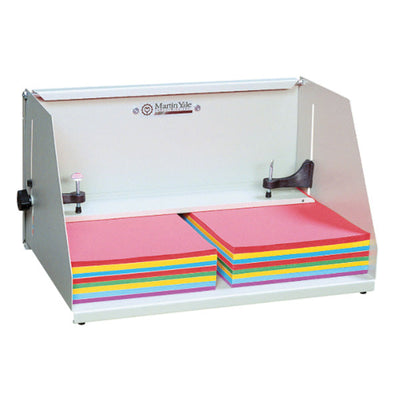
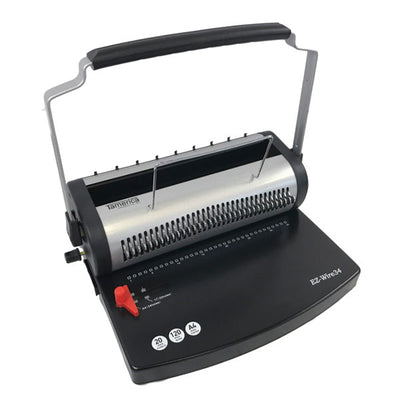
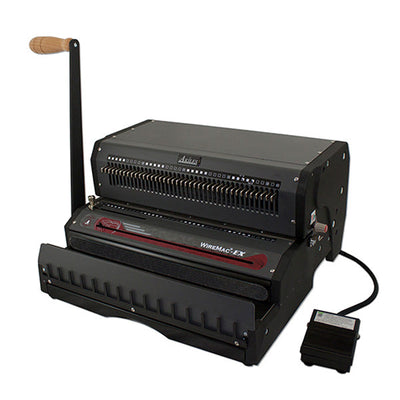
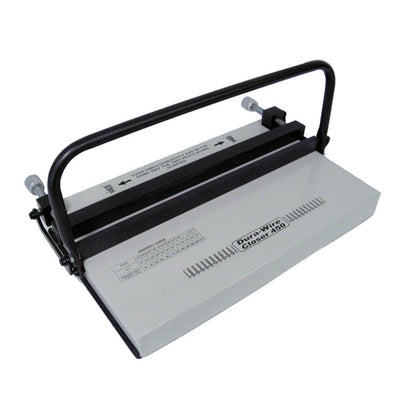
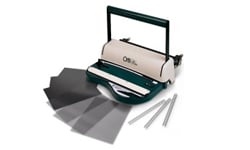
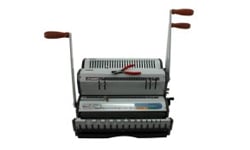
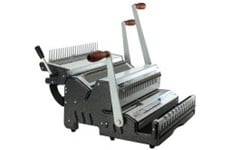
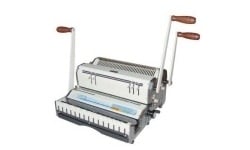
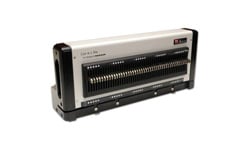
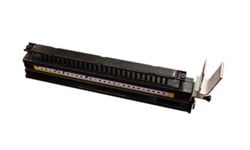
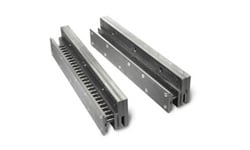
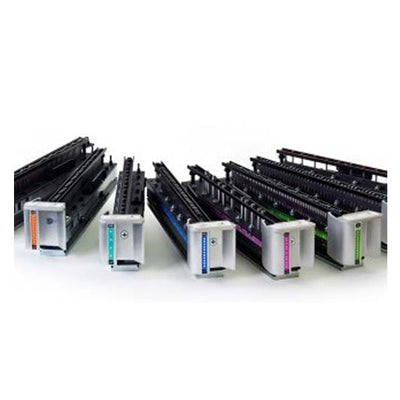
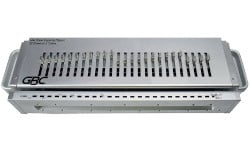
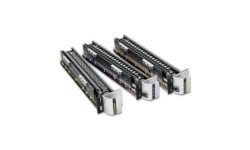
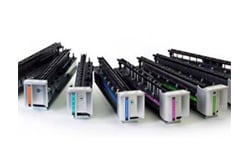
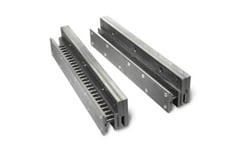
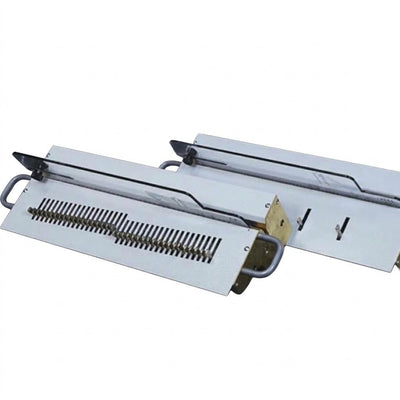
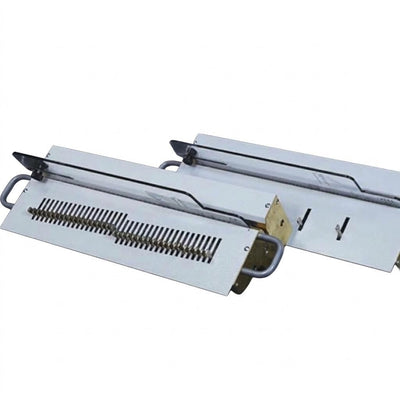
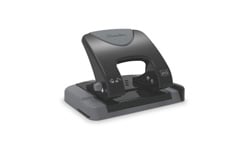
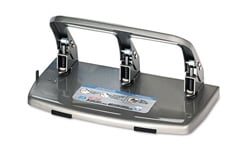
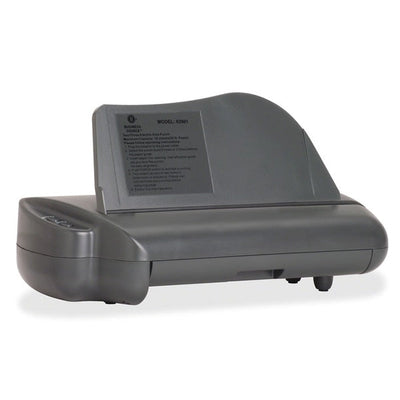
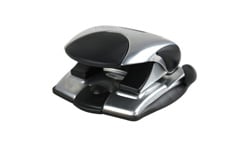
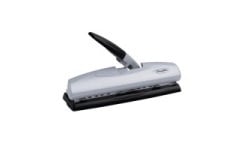
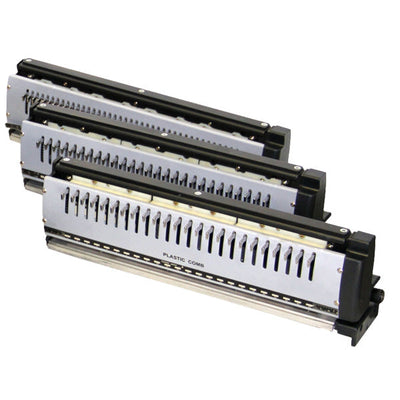
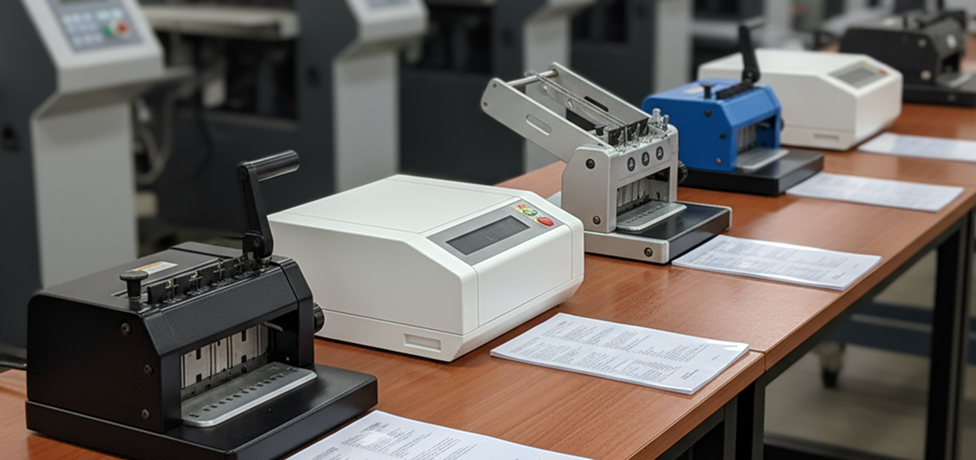
Create reports, manuals, presentations, booklets, and other finished documents with binding machines designed for comb, coil, wire, thermal, and other binding methods. Choose the binding style based on your document type, production volume, and the type of finish you need, with manual machines suited to lower-volume work and electric models helping speed up repetitive binding tasks. For high-volume punching, consider Pro Matic Products or a modular punch fitted with Rhin-O-Tuff Die Sets or Rhin-O-Tuff HD7500 Die Sets. Pair your equipment with compatible materials from the broader Binding Supplies collection, including spiral coils, binding combs, Wire-O spines, thermal covers, VeloBind supplies, Fastback strips, binding covers, pre-punched paper, and other materials used with different binding systems.
Create reports, manuals, presentations, booklets, and other finished documents with binding machines designed for comb, coil, wire, thermal, and other binding methods. Choose the binding style based on your document type, production volume, and the...
Create reports, manuals, presentations, booklets, and other finished documents with binding machines designed for comb, coil, wire, thermal, and other binding methods. Choose the binding style based on your document type, production volume, and the type of finish you need, with manual machines suited to lower-volume work and electric models helping speed up repetitive binding tasks. For high-volume punching, consider Pro Matic Products or a modular punch fitted with Rhin-O-Tuff Die Sets or Rhin-O-Tuff HD7500 Die Sets. Pair your equipment with compatible materials from the broader Binding Supplies collection, including spiral coils, binding combs, Wire-O spines, thermal covers, VeloBind supplies, Fastback strips, binding covers, pre-punched paper, and other materials used with different binding systems.


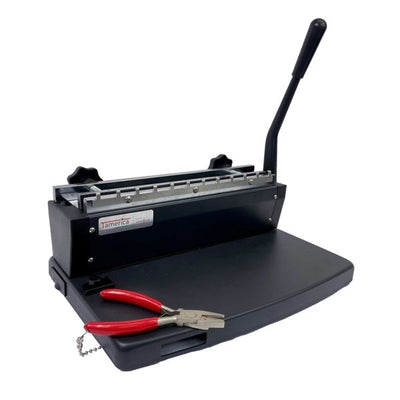
Item#: WIREMAC31
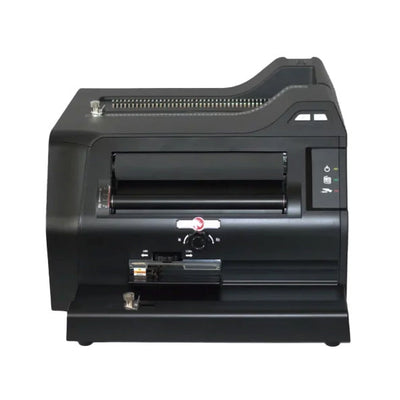
Item#: TPC-4600
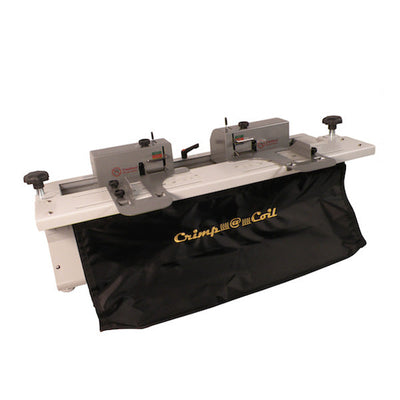
Item#: AKWIREMAC21
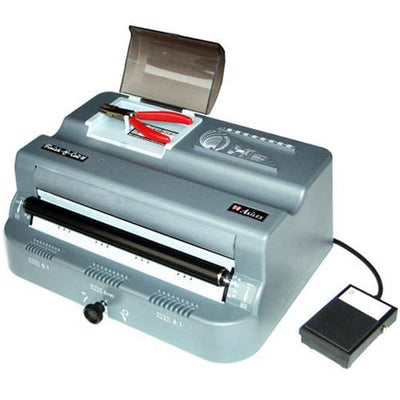
Item#: T210PB
Item#: 5006501
Item#: OPTIMUS-46I
Item#: CBS3000
Item#: TOFFICEPRO46E
Choose the binding style based on how the finished document will be used. Comb binding is practical for editable reports and internal manuals because pages can be changed more easily. Coil binding works well for workbooks, reference guides, cookbooks, and documents that need to lay flat or fold back. Wire binding gives a more polished look for proposals, calendars, and client-facing documents, but it is less editable. Thermal binding is good for reports and presentations that need a clean spine without punched holes. The right machine should match your document style, editing needs, volume, and supply compatibility. For supplies, compare binding supplies before buying.
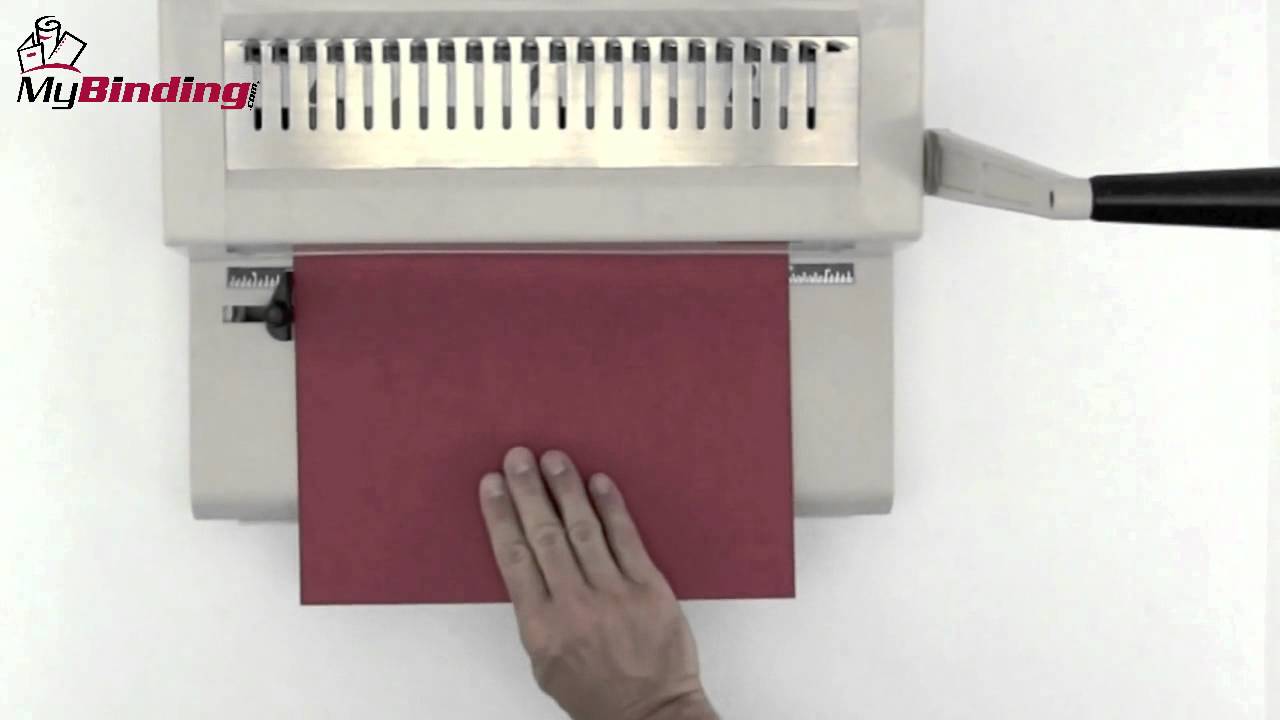
Choose a manual binding machine for lower-volume use, occasional reports, or smaller offices where cost matters more than speed. Manual machines can work well when one person binds short batches and production deadlines are not tight. Choose an electric binding machine when the team binds often, handles thicker stacks, or needs faster punching with less operator fatigue. Electric punching can make repeated jobs more consistent, especially when several departments share the machine. The buying decision should focus on monthly volume, average document thickness, and who will operate it. A machine that feels fine for ten books may become frustrating for hundreds of books.
Punch capacity should be higher than the number of sheets you normally punch at once. Running a machine at its maximum rating all the time can create ragged holes, jams, and faster wear. For light office reports, a modest punch capacity may be enough. For regular manuals, training packets, or production work, a higher-capacity machine saves time and improves consistency. Also remember that punch capacity and binding capacity are different. Punch capacity is how many sheets the machine can punch per stroke. Binding capacity is how thick the finished document can be. Check both before buying, especially for thicker manuals or recurring production jobs.
Compatibility depends on binding style, punch pattern, pitch, paper size, document thickness, and supply type. Coil machines must match coil pitch. Wire machines must match wire pitch. Comb machines need the correct comb size range. Some machines handle only letter-size sheets, while others can support legal, A4, or oversized documents. If your team binds mixed paper sizes, look for features such as disengageable pins or adjustable guides. Supply compatibility matters for every future order, so do not choose a machine without checking the supplies it requires. For cover planning, review binding covers along with the machine.
For shared use, choose a binding machine that is easy to set up, clearly labeled, and strong enough for the busiest user group. Different people may bind different document sizes, cover types, and thicknesses, so simple controls matter. A machine with confusing settings can lead to wasted supplies, mispunched pages, and inconsistent results. Also decide where supplies will be stored and who will reorder them. If the machine supports multiple formats, keep a quick reference nearby for spine size, cover choice, and punching settings. Shared machines should be selected around real workflow, not just the first department that requested one.

Binding machines make it easy to create presentation materials for both internal and external use.
The tricky part can be selecting the correct machine for your finishing needs.
When choosing a specific binding style, it’s important to consider not only the available options
but also your specific usage. Do you need a basic bind for internal reports? Does your document
need to be easily edited? Do you need a professional look? Does the bind need to allow your
materials to lay flat? Will you need to mail the finished documents? How important is security?
How many pages will you need to bind? These are just a few of the things you’ll want to keep in
mind when shopping for a binding machine.
Now let’s take a closer look at your options.
Plastic comb:
This is by far the most popular bookbinding method, often seen in schools, libraries, and other
offices. Quick and simple, comb binding offers a basic closure for documents up to 425 pages that
can lay flat for reading or photocopying. The supplies are available in a large variety of sizes
and colors and can be personalized with a name, logo, or both. Comb binding is ideal for those
looking for a quick cost-effective way to bind items that don’t need staying power or an overly
professional look.
Color coil or spiral:
This is another popular method and it is used for marketing materials, reports, and more. The
coils come in more than 50 different colors. With a large selection of colors, it is really easy
to find supplies that will complement your work. This style is a good choice as well as you can
mail them and they will stay in shape. You can bind work up to 440 pages long with this method.
The one unfortunate drawback with this method is that it can be tricky to bind longer documents.
Of course, the more you do it, the easier it will get.
Twin-loop wire:
This is a great method to use if you need your documents to look professional and presentable.
Wires come in a handful of colors including silver and bronze. Two hole patterns are offered and
the one utilized depends on the size of the wire you are using. Spines ranging in diameter from
3/16” to 9/16” use a 3:1 hole pattern (three holes punched per inch) and can bind items containing
110 pages or less. The others use a 2:1 pattern and are 5/8” to 1-1/2” thick. These supplies are
for documents that are 125 to 250 pages. The one drawback to this method is that the wires can be
crushed in the mail. Be sure to consider this if you’re going to need to send your work to someone.
Other than that, they offer a sturdy, minimalistic bound look.
Thermal:
This form is perfect for documents requiring a highly polished look. Once you have the equipment,
all you need to do is place the pages in either a hardback or paperback cover and stick the book in
the machine. The heat inside the device will cause the adhesive to melt a bit, securing the pages.
The covers can be used with documents containing up to 500 pages. Covers can be customized,
making this method perfect for yearbooks, anthologies, and anything else requiring a polished
look. Keep in mind that thermal binding is more expensive than the other methods listed in this
article. However, the results are usually worth the cost.
Fastback:
Fastback, from Powis Parker, offers a sleek and slim finish, which is ideal for mailing, storage,
and stacking. Documents secured by Fastback binding have a professional perfect bound look to
them. This is one of the fastest methods available. It’s also an eco-friendly form of binding from
a green company, Powis Parker. Fastback offers extra versatility, allowing you to complete tape
binding, perfect binding, and photo book binding styles in a single machine. The supplies needed
come in both hard and soft back options with a wide selection of sizes, colors, and textures.
Combination:
These machines are a great tool to have around if you need to put together both internal
documents and presentations for clients. They offer different binding options combined into one
machine. They tend to be more expensive, but they are perfect for busy offices with wide
varieties of uses.
VeloBind:
If you’re looking for security, this style of binding will keep your documents secure and
un-editable. They have a strong, durable spine that gives your documents a minimal look—very
professional. They can bind together up to 750 pages. The only disadvantage is that materials
cannot lay flat.
ProClick:
Binding with GBC ProClick machines and spines gives documents a finished, professional look
while still allowing easy editing. These spines hold up to 125 sheets of paper and can be folded
over 360 degrees.
Other:
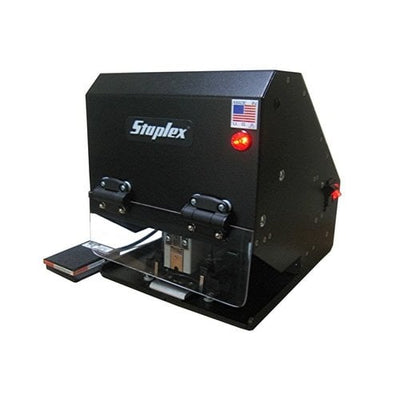
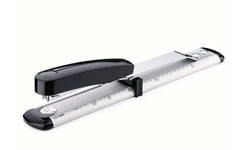
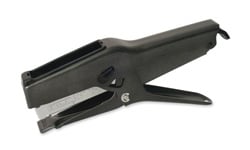
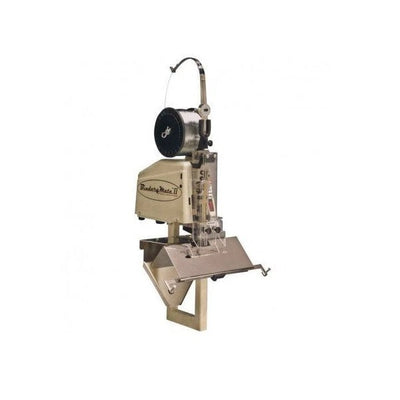
Non-punch styles include stapling, metal binding, metal binding rings, and screw posts. These
options are ideal for smaller projects, laminated materials, or high-usage documents.
With all these options, you are sure to find one offering the style you need at a price that fits
your budget. Still have more questions? Give us a call and we’ll be happy to help you find the
right machine for you.
Here is a list of our top-selling equipment for 2018, across all product categories, by volume of...
Read More
From handmade zines to polished product catalogs, folded and bound booklets are a classic way to share...
Read More
Custom calendars aren’t just great for organization — they’re also an excellent product line for small businesses,...
Read More
Binding101 is now part of MyBinding.
You're in the right place! Same great service. Same great team. Even bigger selection.
Have questions? Visit our FAQ.
Need help? Contact us at 1-800-944-4573 or sales@mybinding.com.
Sign up today and enjoy 10% off your first order — savings up to $100.
Receive a 10% off coupon for just signing up.
Need pricing for this product? Reach out to us and we'll get you a custom quote.
Fill out the form and we'll respond promptly.