
Fast Shipping. Reliable Service. Every Time.

Get your machines and supplies delivered quickly because deadlines shouldn’t wait.

Frequently Asked Questions

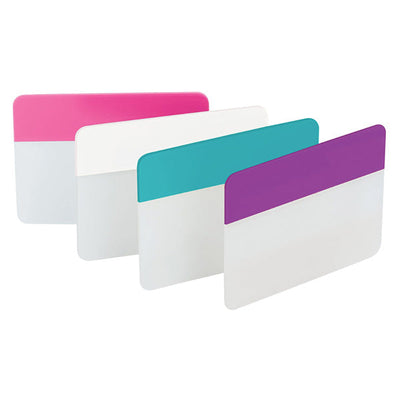
Base the tab count on the number of sections readers need to reach directly and the amount of space available along the sheet edge. Fewer tab positions provide larger labels and are easier to read, while higher tab counts allow more sections but reduce the printable area on each tab. Consider the document’s finished size, binding method, label length, and whether tabs will be printed on one side or both sides. Long section names may require abbreviated wording or a lower tab count. Reviewing index tab dividers can help establish a practical tab count before artwork or section labels are finalized.

Collated tabs arrive arranged in repeated sequences, making them practical when each document uses the same section order. Uncollated tabs are grouped by position and work better when individual sections are assembled in varying quantities or when only certain tab positions are needed. The right format depends on how documents move through printing, inserting, and binding. For recurring manuals with identical sections, collated sets can reduce sorting time and assembly errors. For variable packets, uncollated stock provides more control. Before ordering, map the production sequence and determine whether staff will assemble one complete document at a time or process the same section across many documents.

Preprinted tabs are suitable when the required labels follow a standard sequence such as numbers, months, alphabetical divisions, or common business headings. They reduce artwork preparation and can be easier to reorder because the wording is already established. Custom printing makes more sense when the section names are unique to a company, legal matter, training program, proposal, or operating manual. The decision should also account for quantity, turnaround expectations, branding needs, and whether section names may change later. Standard projects can often use pre-printed index tabs, while specialized documents may require a tailored sequence.

Confirm the body sheet dimensions, tab extension, binding edge, portrait or landscape orientation, and the side on which the tabs must appear. A standard sheet with an extended tab edge has a larger overall width than the body pages, which can affect printing, punching, storage, and shipping. Left-side and right-side layouts are not interchangeable once printing and punching have been completed. The punch pattern must also leave enough margin so holes do not interfere with tab text or reinforced areas. Measure an assembled sample that includes covers, tabs, and body sheets rather than relying only on the original document dimensions.

They can be incorporated into a production workflow when the printer, paper path, tab settings, stock weight, and punch equipment support the selected material. Confirm that the printing equipment accepts extended tab sheets and that the tabs are loaded in the correct sequence and orientation. Printing software may also require special tab settings or programmed inserts. If punching occurs after printing, allow enough binding margin to protect the printed text and tab extension. Operations producing higher quantities may use copier tabs designed for print-based document assembly, but equipment specifications should be confirmed before purchasing full cartons.

Featured Blogs

View all
Binding101 2018 Best Sellers

Binding101 2018 Best Sellers

Here is a list of our top-selling equipment for 2018, across all product categories, by volume of...

Read More
DIY Booklets: How to Make Event Programs, Catalogs, & Magazines

DIY Booklets: How to Make Event Programs, Catalogs, & Magazines

From handmade zines to polished product catalogs, folded and bound booklets are a classic way to share...

Read More
How to Make Custom Calendars: A Step-by-Step Guide

How to Make Custom Calendars: A Step-by-Step Guide

Custom calendars aren’t just great for organization — they’re also an excellent product line for small businesses,...

Read More
