Fast Shipping. Reliable Service. Every Time.

Get your machines and supplies delivered quickly because deadlines shouldn’t wait.

Frequently Asked Questions

Choose a roll laminator when you need continuous lamination, wider formats, or repeated production without loading one pouch at a time. Roll laminators use film rolls and can process multiple pieces in sequence, which helps with posters, signs, menus, instructional sheets, maps, and other high-volume work. A pouch laminator is better for occasional letter-size documents, ID cards, photos, and smaller pieces because it is simpler and takes less space. If the work is mostly one-off documents, pouch laminators may be enough. If the work includes long runs, large sheets, or frequent daily use, roll laminators are usually the better match.

Roll film thickness is measured in mils, with thinner films giving more flexibility and thicker films adding more stiffness. A lighter film can work well for items that need protection but still need to bend or stack easily. A thicker film is better when the piece will be handled often or needs a more rigid feel, such as menus, signs, reusable charts, and reference sheets. Remember that roll film is usually applied from top and bottom rolls, so the finished feel depends on both layers together. Check your laminator’s film thickness rating before ordering roll laminating film, because not every machine can run every thickness well.

Choose thermal roll lamination for common paper items that can handle heat and need a durable bond. Choose cold pressure-sensitive lamination when the material is heat-sensitive, such as certain prints, inks, photos, or specialty media. Heat-assist lamination uses lower heat to help pressure-sensitive adhesive flow better, but it is not the same as full thermal lamination. The choice should be based on the material, adhesive type, finish, and machine capability. If curling, bubbling, silvering, or poor adhesion appears during testing, the issue may come from heat, speed, film type, or media compatibility. A small test run is safer than committing an entire print batch.

Choose a roll laminator wide enough for the largest material you expect to run, including a little extra room for alignment. A machine that is too narrow limits future work and can force trimming or outsourcing. For posters, signs, maps, and wide-format prints, match the machine width to the common media width used in your workflow. Also check roll film width and core size because film must physically fit the laminator. If most jobs are letter-size or smaller, a wide-format unit may be more machine than you need. If large graphics are common, a wider roll laminator can save handling time and reduce job bottlenecks.

Check film width, film thickness, core size, adhesive type, and finish before ordering a roll laminator. Roll film should match the machine’s width and spindle or core requirements. Thermal film and pressure-sensitive film are not the same, so choose based on the laminator type and material being protected. Gloss film makes colors look brighter, while matte or lower-glare finishes can be easier to read under bright lights. Many roll workflows use matched top and bottom rolls, so confirm both are available in the correct size. If your team also laminates small pieces, pair the roll setup with laminating pouches only when a pouch machine is also available.

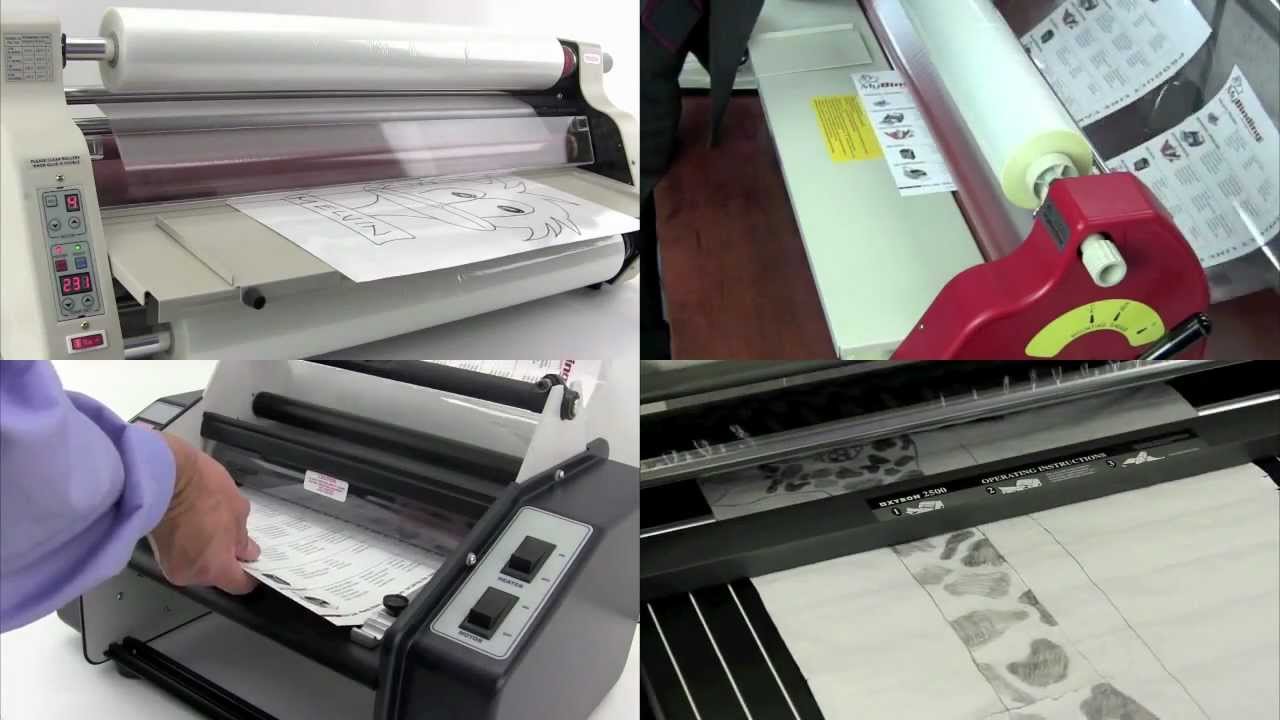
Roll Laminators Overview Video

Roll Laminators Overview Video

Welcome to MyBinding video. Once a roll laminator is all set up and ready to go, it is fast and efficient. Whether it’s hot or cold lamination, MyBinding.com has a great variety for you – anywhere from 12 and 14 inches, all the way up to 27 inches and beyond for institutions and schools. MyBinding is here at your service. We’re just a click, call or chat away and we’ll walk you through what you need and how you can get it fast. And our machines come with a range of user control panels for more flexibility. Many of these machines and the supplies that go with them do a lot more than just straight lamination – permanent and repositional stickers, magnets, clear on one side and opaque on the other, plenty of options. You’ll also find on our website plenty of how-to and demonstration videos so you know how to load and operate your machine properly and most efficiently. Because when image matters, MyBinding.

Featured Blogs

View all
Binding101 2018 Best Sellers

Binding101 2018 Best Sellers

Here is a list of our top-selling equipment for 2018, across all product categories, by volume of...

Read More
DIY Booklets: How to Make Event Programs, Catalogs, & Magazines

DIY Booklets: How to Make Event Programs, Catalogs, & Magazines

From handmade zines to polished product catalogs, folded and bound booklets are a classic way to share...

Read More
How to Make Custom Calendars: A Step-by-Step Guide

How to Make Custom Calendars: A Step-by-Step Guide

Custom calendars aren’t just great for organization — they’re also an excellent product line for small businesses,...

Read More