Fast Shipping. Reliable Service. Every Time.

Get your machines and supplies delivered quickly because deadlines shouldn’t wait.

Frequently Asked Questions

Colored copier tabs help when the document set needs faster visual sorting, not just printed tab labels. A neutral tab set can work well for basic indexing, but color becomes useful when teams want to separate sections by department, process, client, or document type at a glance. That is especially helpful in long manuals, policy binders, and training materials where users return to the same sections often. The first decision should still be printing method and tab format, because a good color choice will not fix the wrong tab style. Buyers who need a particular stacking order for printer output often move into single reverse collated copier tabs once they know how their equipment feeds and prints finished sets.

Start with printer compatibility, tab arrangement, paper weight, and whether the tabs need a coated surface for cleaner toner hold. Copier tabs are meant to run through compatible laser or copier equipment, so the buyer should make sure the job setup matches the tab style being ordered. It also helps to think about how many tabs each document needs, whether the set should be collated already, and whether the final binder uses a standard three hole format or something custom. Buyers often focus on color first, but print setup creates more ordering mistakes than color ever will. A cleaner buying process comes from confirming the document workflow first, then choosing the finish and tone that best fits the finished set.

The right choice depends on how your printer or copier expects the stack to be loaded and output. Single reverse and double reverse are both useful when the machine feeds the set in a way that changes the visible finished order, while straight collated works better when the stack should be read in normal top to bottom sequence after printing. The best approach is to match the tab style to the equipment routine you already use instead of trying to force one arrangement into every job. Buyers who work with machines that require paired or repeating positions may find double reverse collated copier tabs easier to fit into existing production. That decision should be made before color, because correct tab order matters more than appearance when the sets are finished.

A coated tab surface makes more sense when the printing needs cleaner toner hold, sharper label appearance, or better wear resistance after the document is handled repeatedly. Plain tabs can still work well for many internal jobs, but a coated finish can be worth it when the binder will be used often, shared among several people, or stored for long periods. The right choice depends on how much handling the set will take and how polished the final piece needs to look. Buyers should also think about whether the tabs need to stay readable after frequent flipping, filing, and transport. A better finish does not change the tab format, but it can improve the way the finished divider set holds up through regular use.

A presentation ready finished order often comes down to how the tabs appear once the printed set is assembled in the binder. If the goal is a clean top to bottom sequence that reads naturally when the document is opened, straight collated copier tabs are often the most useful next step to review. They suit workflows where the user wants the visible tab order to match the logical reading order without rethinking the finished stack. That makes them practical for reports, client binders, and internal manuals that need to look organized from the first flip. Buyers should still confirm printer requirements, but straight collated tabs are often the easiest fit when the final reading order matters just as much as the print run itself.

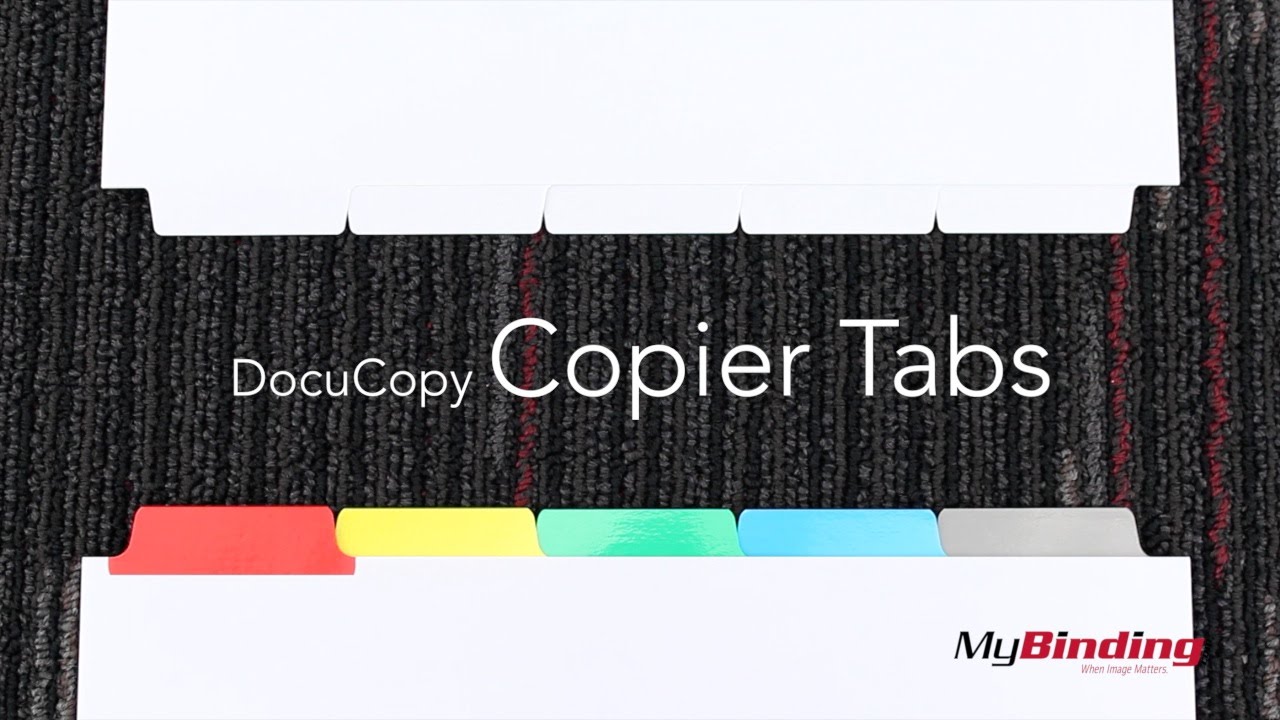
These are DocuCopy Copier Tabs, designed to print on with laser-toner printers!First off, the are organized in different ways:  Single Reverse has the last tab on top, and the first tab on the bottom, it repeats this way through the whole stack.Double Reverse starts with the last tab, but is organized that there are two of the same kind of tab next to each other.Straight collated tabs are organized as you would present them in a binder or book with the first tab on the top.Then there is uncollated, which gives you only one position of tab. Which organizational style you use is determined by what your printer requires.They come in plain paper tabs, colored trilar, and clear trilar tabs.You can find two thicknesses of paper, with 90 pounds and 110 pounds, though 90 pounds has the largest variety of tabs.You can purchase them prepunched with a three hole pattern, or you can call for custom punches.These dividers come in variations of 3 tabs to 10 tabs, and as you can see demoed here is the standard 5 tab.The best part, is that you can print on them!

Featured Blogs

View all
Binding101 2018 Best Sellers

Binding101 2018 Best Sellers

Here is a list of our top-selling equipment for 2018, across all product categories, by volume of...

Read More
DIY Booklets: How to Make Event Programs, Catalogs, & Magazines

DIY Booklets: How to Make Event Programs, Catalogs, & Magazines

From handmade zines to polished product catalogs, folded and bound booklets are a classic way to share...

Read More
How to Make Custom Calendars: A Step-by-Step Guide

How to Make Custom Calendars: A Step-by-Step Guide

Custom calendars aren’t just great for organization — they’re also an excellent product line for small businesses,...

Read More